In the harsh and unforgiving territories of Arizona, where justice often comes at the end of a gun, and mercy is a luxury few can afford, an extraordinary story of redemption is about to unfold.
Two Apache sisters, torn from everything they’ve ever known, will discover that sometimes salvation comes from the most unexpected source.
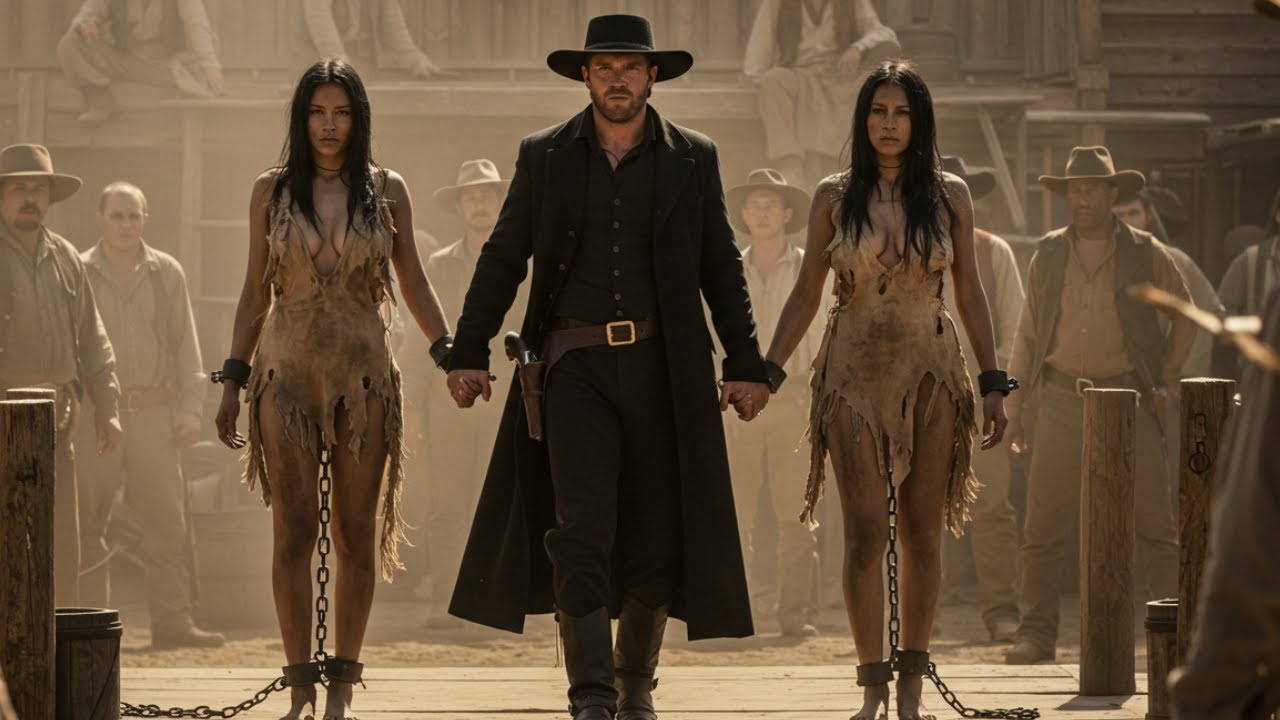
A man haunted by his own past will make a choice that defies everything society expects of him. This is a story about the true meaning of family, the price of freedom, and how love can bloom even in the darkest soil of human cruelty.
Before we begin this powerful journey, let us know in the comments what country you’re watching from.
We love connecting with our global community. and uh dust kicked up by 50 horses and wagons hung in the air like a brown curtain over the makeshift auction ground outside Tombstone.
October 3rd, 1881, a date that would burn itself into my memory forever. I hadn’t planned to be there that day, but business had kept me in town longer than expected, and curiosity got the better of me when I heard the commotion.
What I saw when I reached the crowd made my blood run cold. It wasn’t cattle being sold, as I’d assumed. It was people. My name is Marcus Coleman, though most folks call me Cole.
I’m 42 years old, and I’ve seen enough of this world’s cruelty to last several lifetimes. I served as a cavalry officer during the Apache Wars, fought in battles that still haunt my dreams, and lost my wife Sarah to consumption three years ago.
Since then, I’ve lived alone on my ranch in Red Canyon, trying to make peace with a past that refuses to stay buried. But nothing in my experience had prepared me for what I witnessed that afternoon. The auctioneer, a greasy man named Ezra Blackwood, stood on a makeshift platform, hawking human beings like livestock.
“Ladies and gentlemen,” he called out in his oily voice, “we have some fine specimens today. strong backs, good for ranch work, mining, whatever your needs might be.
The crowd was a mix of rough-looking men, miners, ranchers, and others, whose intentions I didn’t want to contemplate. They examined the captives like they were inspecting horses, checking teeth and muscles, discussing their potential uses in voices that turned my stomach.
Most of the prisoners were Apache, taken in recent raids or captured during skirmishes. men, women, even some children, all chained together and displayed like merchandise. The site should have been illegal, but Sheriff Stone was right there in the crowd, not as law enforcement, but as a potential buyer. Then I saw them.
Two young Apache women stood near the end of the line, and something about them immediately caught my attention. They were clearly sisters. They had the same high cheekbones, the same proud bearing, despite their circumstances.
The older one, maybe 26 years old, stood protectively in front of the younger, who couldn’t have been more than 19.
What struck me most was their defiance. While other captives showed varying degrees of resignation or terror, these two stood tall. The older sister’s eyes burned with a fury that seemed barely contained, while the younger one’s gaze held a dignity that no amount of degradation could touch.
Ah, now here we have something special, Blackwood announced as he approached the sisters.
Two Apache squisters, I’m told. Look at these fine specimens, young, strong, and I guarantee they’ll work hard with the proper motivation. The lewd chuckles from the crowd made me clench my fists. The older ones got some fire in her, Blackwood continued, staying well back from the woman’s reach.
Two Apache sisters, torn from everything they’ve ever known, will discover that sometimes salvation comes from the most unexpected source.
A man haunted by his own past will make a choice that defies everything society expects of him. This is a story about the true meaning of family, the price of freedom, and how love can bloom even in the darkest soil of human cruelty.
Before we begin this powerful journey, let us know in the comments what country you’re watching from.
We love connecting with our global community. and uh dust kicked up by 50 horses and wagons hung in the air like a brown curtain over the makeshift auction ground outside Tombstone.
October 3rd, 1881, a date that would burn itself into my memory forever. I hadn’t planned to be there that day, but business had kept me in town longer than expected, and curiosity got the better of me when I heard the commotion.
What I saw when I reached the crowd made my blood run cold. It wasn’t cattle being sold, as I’d assumed. It was people. My name is Marcus Coleman, though most folks call me Cole.
I’m 42 years old, and I’ve seen enough of this world’s cruelty to last several lifetimes. I served as a cavalry officer during the Apache Wars, fought in battles that still haunt my dreams, and lost my wife Sarah to consumption three years ago.
Since then, I’ve lived alone on my ranch in Red Canyon, trying to make peace with a past that refuses to stay buried. But nothing in my experience had prepared me for what I witnessed that afternoon. The auctioneer, a greasy man named Ezra Blackwood, stood on a makeshift platform, hawking human beings like livestock.
“Ladies and gentlemen,” he called out in his oily voice, “we have some fine specimens today. strong backs, good for ranch work, mining, whatever your needs might be.
The crowd was a mix of rough-looking men, miners, ranchers, and others, whose intentions I didn’t want to contemplate. They examined the captives like they were inspecting horses, checking teeth and muscles, discussing their potential uses in voices that turned my stomach.
Most of the prisoners were Apache, taken in recent raids or captured during skirmishes. men, women, even some children, all chained together and displayed like merchandise. The site should have been illegal, but Sheriff Stone was right there in the crowd, not as law enforcement, but as a potential buyer. Then I saw them.
Two young Apache women stood near the end of the line, and something about them immediately caught my attention. They were clearly sisters. They had the same high cheekbones, the same proud bearing, despite their circumstances.
The older one, maybe 26 years old, stood protectively in front of the younger, who couldn’t have been more than 19.
What struck me most was their defiance. While other captives showed varying degrees of resignation or terror, these two stood tall. The older sister’s eyes burned with a fury that seemed barely contained, while the younger one’s gaze held a dignity that no amount of degradation could touch.
Ah, now here we have something special, Blackwood announced as he approached the sisters.
Two Apache squisters, I’m told. Look at these fine specimens, young, strong, and I guarantee they’ll work hard with the proper motivation. The lewd chuckles from the crowd made me clench my fists. The older ones got some fire in her, Blackwood continued, staying well back from the woman’s reach.